How to Plan the Perfect Hawaii Vacation
Hawaii rewards careful planning. The enormous variety of experiences available across multiple islands, the high cost of accommodation during peak periods, and the advance booking requirements for popular activities, restaurants, and permits mean that those who plan ahead consistently have far better trips than those who improvise. This guide covers everything you need to know to plan a Hawaii vacation that matches your budget, timeframe, and interests.
The first and most important planning decision is which island or islands to visit. Hawaii is not a single destination — it is six distinct travel destinations, each with its own personality, strengths, and limitations. Making the right choice for your specific interests and travel style is the foundation of a successful trip, and understanding the differences between the islands before you book is essential.
Choosing Your Island: A Decision Framework
The most common mistake first-time Hawaii visitors make is assuming that one island is more or less interchangeable with another. In reality, the six main visitor islands have dramatically different characters that suit different traveler profiles. Here is a frank assessment of each island's strengths and limitations to help you make the right choice:
Oahu is the right choice if you want the broadest range of activities, the best public transportation, the most diverse dining scene, the widest selection of accommodations at every price point, and don't mind sharing the experience with large numbers of other visitors. Oahu is also the best single-island choice for first-time Hawaii visitors, offering an accessible introduction to Hawaiian culture alongside world-class beaches and activities.
Maui is the right choice if you want the combination of excellent beaches, world-class whale watching (in season), the Road to Hana adventure, and the sublime Haleakalā sunrise experience. Maui's resort areas are well-developed and offer an excellent range of dining and accommodation options, but the island is substantially less congested than Oahu outside of its main resort corridors.
Kauai is the right choice if your priorities are raw natural beauty, hiking, and a more relaxed, less commercialized atmosphere. Kauai has deliberately limited development, resulting in an island that feels genuinely pristine compared to its more visited neighbors. The Na Pali Coast is simply incomparable. Kauai is also the wettest island, which is a double-edged sword: the rain creates those extraordinary green valleys, but it can also disrupt outdoor plans.
The Big Island is the right choice if geological spectacle is your priority. Watching active volcanic activity, swimming with manta rays, snorkeling at Kealakekua Bay, and gazing at the stars from Mauna Kea are experiences that exist nowhere else. The Big Island is huge — roughly the size of Connecticut — and requires more planning to navigate efficiently than the other islands.
Molokai is the right choice if you want the most authentic, crowd-free, genuinely off-the-beaten-path Hawaiian experience. Most visitors never go to Molokai, which is precisely what makes it appealing to those seeking the real Hawaii. There are virtually no resorts, minimal tourist infrastructure, and a community that values its quiet pace fiercely.
Lanai is the right choice if luxury and seclusion are paramount. Two world-class Four Seasons resorts, virtually no crowds, extraordinary snorkeling, and an uncanny atmosphere of exclusivity make Lanai unique. It is, however, among the most expensive island experiences in Hawaii.
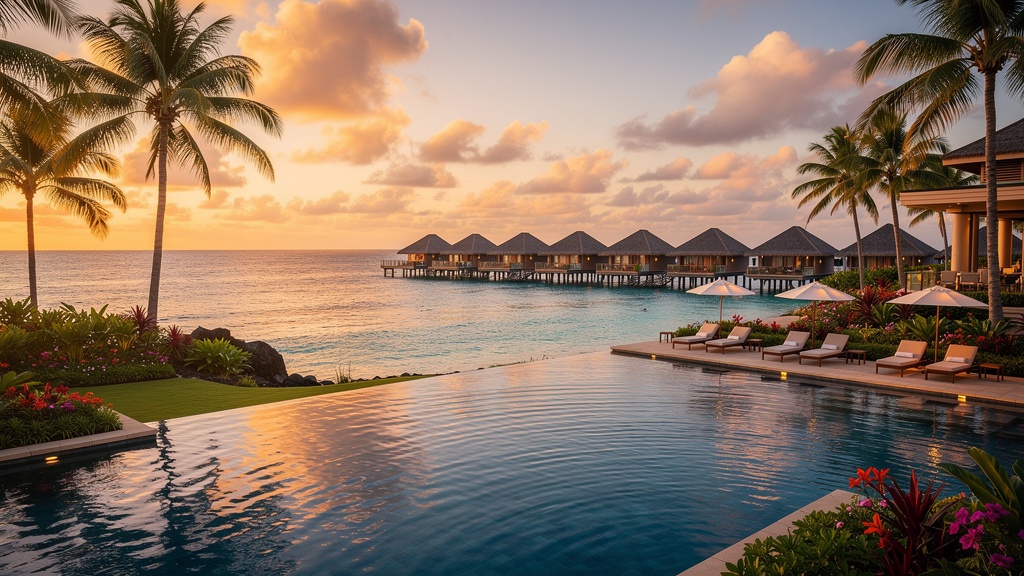
Accommodation Quick Guide
- Luxury resorts: $500–$2,000+/night — best views and amenities
- Mid-range hotels: $200–$500/night — good location, decent facilities
- Vacation rentals (VRBO/Airbnb): $150–$400/night — local feel, kitchen access
- Condotels: $180–$450/night — resort amenities at condo prices
- State campgrounds: $18–$30/night — incredible beach locations
- Book 3–6 months ahead for peak season (Jun–Aug, Dec–Jan)
Getting Around Hawaii: Transportation Options Explained
Transportation in Hawaii requires more planning than most domestic US destinations, primarily because the islands are physically separated by ocean — there are no bridges or ferries connecting the main islands — and because public transportation within most islands is limited for tourist purposes. Understanding Hawaii's transportation landscape before you travel will save both money and frustration.
Inter-island travel is almost universally by air. Hawaiian Airlines and Southwest Airlines operate frequent flights between the main islands, with journey times of 20 to 50 minutes depending on the route. Booking inter-island flights at least 2 to 3 weeks in advance generally yields the best prices; last-minute fares can be surprisingly expensive. Budget $80 to $250 per person round trip for inter-island flights, depending on timing and airline.
On most islands, a rental car is essentially mandatory for independent exploration. The exceptions are Oahu, where the TheBus public transit system is genuinely useful for getting between Honolulu, Waikiki, and major tourist destinations, and Lanai, where the island is small enough to explore without a car if you're staying at one of the Four Seasons resorts (which provide shuttle service). For every other island, a rental car gives you the freedom to explore on your own schedule and reach the remote beaches, trailheads, and viewpoints that make Hawaii genuinely extraordinary.
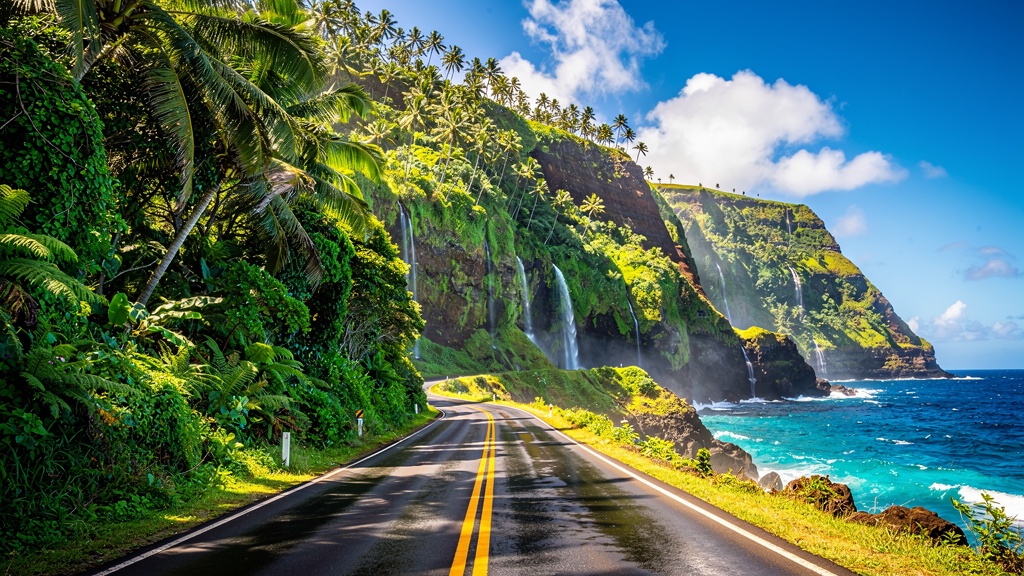
Road to Hana: Essential Tips
Maui's Road to Hana is one of the world's great scenic drives — 64 miles of jaw-dropping coastal and rainforest scenery, with 620 curves and 59 one-lane bridges. Plan for a full day.
- Start early — departing Kahului by 7 AM beats the crowds
- Fill your gas tank before departing — limited fuel on the route
- Some stops require reservations (Twin Falls, Wai'anapanapa)
- Pack a cooler with snacks and drinks
- Returning same way vs continuing around the island — both work
- Allow a minimum of 8 hours; overnight in Hana is ideal
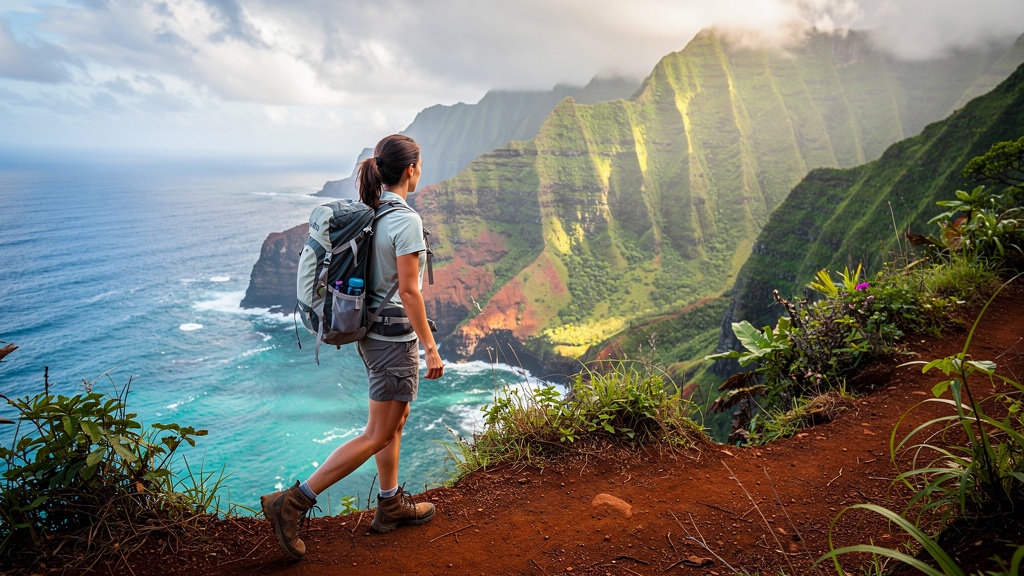
Hiking Packing Checklist
- 2 liters of water minimum per person
- Reef-safe sunscreen (SPF 50+)
- Trail shoes with good grip (not flip-flops)
- Light rain jacket (especially Kauai/windward areas)
- Insect repellent for rainforest trails
- Printed trail map (cell service is unreliable)
- Energy snacks and a small first aid kit
- Hiking poles for steep/muddy terrain
Budgeting for Hawaii: Realistic Cost Expectations
Hawaii is one of the most expensive domestic destinations in the United States, and it is important to budget realistically to avoid financial stress during your trip. The high cost of living in Hawaii — driven by the enormous expense of importing nearly everything consumed on the islands — flows through to accommodation, food, and activity prices at every level of the market.
A realistic daily budget for two people traveling mid-range in Hawaii breaks down approximately as follows: accommodation $280–400/night; car rental $60–90/day; fuel $30–50/day; dining $150–250/day for two (mixing self-catering with restaurant meals); activities $100–200/day; and incidentals $30–50/day. This puts a mid-range two-person Hawaii vacation at approximately $650–1,040 per day, or $4,550–7,280 for a week, before airfare.
Budget travelers can significantly reduce these costs through strategic choices. State beach parks offer camping for $18–30/night and are often located on extraordinary beaches that surpass the views from resort rooms costing twenty times as much. Self-catering through local supermarkets and farmers markets brings food costs dramatically down. Many of Hawaii's best natural attractions — beaches, hiking trails, most state parks — are free. And traveling during shoulder seasons (April–May or September–October) reduces accommodation costs by 20–40% compared to peak periods.
| Category | Budget | Mid-Range | Luxury |
|---|---|---|---|
| Accommodation (7 nights) | $700–1,200 | $1,960–2,800 | $5,000–14,000+ |
| Car Rental + Fuel (7 days) | $450–600 | $630–980 | $1,200–2,500 |
| Food & Dining (7 days) | $500–700 | $1,050–1,750 | $3,000–6,000+ |
| Activities & Excursions | $200–400 | $700–1,400 | $3,000–8,000+ |
| Airfare (from US mainland) | $600–900 | $900–1,600 | $3,000–12,000 |
| Total (approx.) | $2,450–3,800 | $5,240–8,530 | $15,200–42,500+ |
Arrival in Hawaii: What to Expect at the Airport
Most international and mainland US flights to Hawaii arrive at Daniel K. Inouye International Airport (HNL) in Honolulu on Oahu, which is the state's main gateway. Honolulu Airport has been undergoing extensive renovation and expansion, and the new mauka concourse opened in recent years offers significantly improved facilities. Direct flights to Maui's Kahului Airport (OGG), Kona International Airport (KOA) on the Big Island, and Lihue Airport (LIH) on Kauai are increasingly common from major US mainland cities, allowing travelers to bypass Oahu entirely if that island is not part of their itinerary.
Hawaii maintains strict agricultural inspection requirements that apply to both incoming and outgoing travelers. Upon arrival from the US mainland, passengers are not subject to the same agricultural inspections as international arrivals, but certain items — particularly fresh fruits, vegetables, plants, and certain animal products — have restrictions. Upon departure from Hawaii, all bags are subject to agricultural inspection to prevent the spread of invasive species, including fruit flies, soil, and certain plant materials. Items that fail inspection will be confiscated, so it is important to check current agricultural regulations before packing items as gifts or souvenirs.
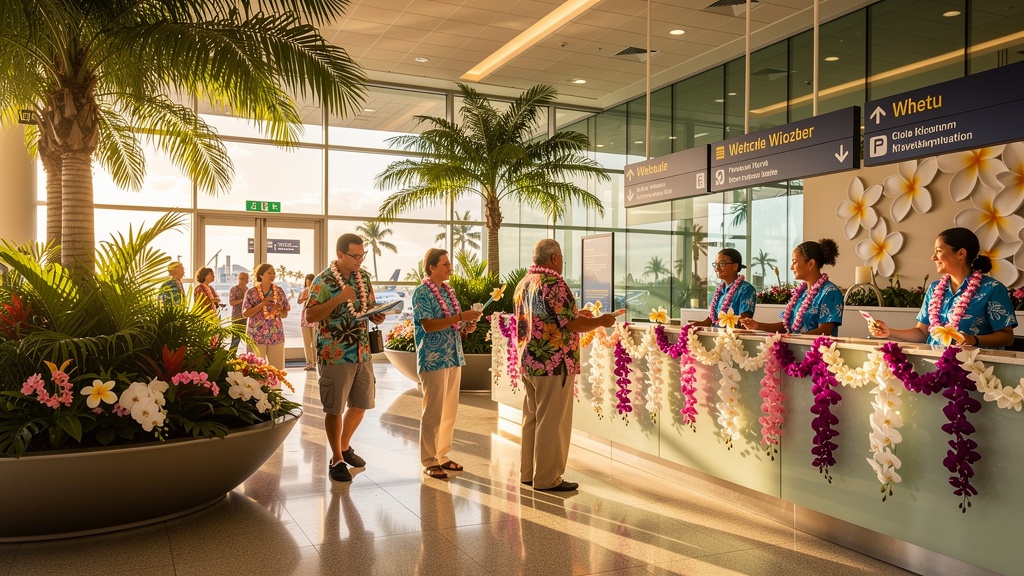
Airport Quick Tips
- Arrive 2.5 hours before domestic flights from HNL
- Pre-arrange car rental for smooth airport departure
- Baggage carousels in Hawaii can take 30–45 min
- Direct flights to Maui, Kona & Kauai available from major cities
- Download Google Maps offline before losing WiFi
- Agricultural inspections on ALL departing bags — know the rules
The Ultimate Hawaii Packing List
Packing for Hawaii requires balancing the demands of a tropical beach holiday with the realities of a destination that includes high-altitude summit hikes, cool breezy evenings, and occasional tropical downpours. Here is a comprehensive packing framework developed from extensive experience across all the main islands:
Sun Protection (Critical): Hawaii's proximity to the equator, combined with the reflective properties of sand and water, makes sun protection an absolute priority. Pack reef-safe SPF 50+ sunscreen (Hawaii state law prohibits the sale of sunscreens containing oxybenzone and octinoxate, which damage coral reefs), a wide-brimmed hat, UV-protective sunglasses with 100% UV400 protection, and rash guards for water activities.
Clothing Strategy: The key to Hawaii clothing is layering and quick-drying fabrics. Pack lightweight, breathable clothing for daily beach and sightseeing use, but include at least two layers for summit visits (Haleakalā, Mauna Kea) where temperatures can drop to near freezing. A light rain jacket is essential on all islands, particularly Kauai. Dress code at Hawaiian restaurants is generally casual — even the finest restaurants welcome smart-casual attire without requiring jackets or ties.
Footwear: Comfortable flip-flops or sandals are the primary footwear for most of Hawaii's social and beach activities. However, good hiking shoes with ankle support and grip are essential if you plan any significant trail walking — many of Hawaii's best hikes involve muddy, uneven terrain that is genuinely treacherous in flip-flops. Water shoes are useful for rocky shore snorkeling access points.
Water Sports Gear: Consider bringing your own snorkel gear (mask, snorkel, fins) if you plan significant time in the water — rented gear is often of lower quality and may not fit well. Prescription dive masks are available from some outfitters if you wear glasses. A waterproof phone case or action camera (GoPro-type) is invaluable for capturing underwater experiences.
Electronics and Connectivity: Hawaii operates on standard US 110V power with two-pin plugs, identical to the mainland US. Cell coverage is generally good on the main islands, particularly on Oahu and Maui, but becomes patchy in remote areas, rainforest interiors, and along scenic drives like the Road to Hana. Download offline maps before heading into remote areas. Consider whether a dedicated camera is worthwhile — the difference in quality between a DSLR or mirrorless camera and modern smartphone cameras has narrowed considerably, but for serious photography the dedicated camera remains superior.
Hawaii Etiquette: Being a Respectful Visitor
Hawaii's tourist industry is critically important to the state's economy, but the relationship between the tourism industry and local communities is complex and sometimes fraught. Visitors who make an effort to travel respectfully — to understand and honor local customs, to spend their money in locally owned businesses, and to minimize their environmental impact — are actively contributing to a more sustainable form of tourism that benefits Hawaii's communities.
The concept of malama aina — caring for the land — is central to Hawaiian culture and should inform every visitor's behavior. Never remove sand, rocks, coral, or plants from Hawaiian environments; this is both culturally disrespectful and, in the case of certain protected areas, illegal. Always use designated parking areas and observe trail boundaries to prevent erosion of off-trail areas. Pack out all trash, including from remote beaches where there may be no bins.
When visiting cultural sites — heiau (temples), fishponds, historical monuments, and living cultural communities — approach with the same respect you would give any sacred or significant place in any culture. Ask before photographing cultural performances or community ceremonies. Learn the correct pronunciation of Hawaiian place names, which demonstrates respect for the language and culture even if your command of it is limited.
The most transformative tip for a Hawaii vacation is simply to wake up early. Sunrise at Haleakalā, first light at Lanikai Beach, the North Shore at 7 AM before the crowds — the most beautiful and peaceful versions of Hawaii's most famous experiences happen in those first hours of daylight. Set that alarm, and you'll thank yourself for the rest of your life.
Health and Safety in Hawaii: Practical Precautions
Hawaii is generally a very safe destination, but there are specific health and safety considerations that are different from mainland US travel. Ocean safety is the most significant — drownings and ocean-related injuries are Hawaii's leading cause of tourist fatalities, almost all of which are preventable. Always check wave and current conditions before entering the water, never swim alone at unguarded beaches, never turn your back on the ocean, and give yourself wide berth from cliff edges near surge zones.
Hawaii's sun is intense year-round, and sunburn is the most common medical complaint among visitors. Dehydration is a related risk, particularly during hiking or outdoor activities — drink more water than you think you need, and add electrolytes if exercising heavily in the heat. Altitude sickness is a genuine concern for visitors to Mauna Kea (13,796 feet) and Haleakalā (10,023 feet); ascend slowly, and anyone experiencing severe headache, nausea, or confusion should descend immediately.
Leptospirosis, a bacterial infection transmitted through fresh water contaminated with animal urine, poses a risk in Hawaiian streams, rivers, and waterfalls — particularly after heavy rain. Avoid immersion in fresh water in Hawaii unless the conditions are known to be safe, and always cover cuts and abrasions before any fresh water exposure. This is not a reason to avoid Hawaii's spectacular waterfalls but a reason to be thoughtful about how you interact with them.