
Discover the Magic of the Hawaiian Islands

From the lush valleys of Kauai to the volcanic shores of the Big Island, Hawaii offers an unparalleled tapestry of natural wonder, cultural richness, and warm island hospitality.

🏖️
World-Class Beaches
🌋
Active Volcanoes
🤿
Coral Reef Diving
🌺
Rich Hawaiian Culture
🍍
Fresh Tropical Cuisine
🌈
Year-Round Sunshine

Why Hawaii Is Like No Other Destination on Earth

An archipelago of breathtaking islands, each with its own unique character, landscape, and story — Hawaii is far more than just a beach holiday.

Young woman relaxing on a pristine Hawaiian beach at golden hour with palm trees and turquoise ocean
🌅 Hawaii, USA

Eight Islands, Infinite Experiences

The Hawaiian archipelago stretches across 1,500 miles of the central Pacific Ocean and comprises eight main islands, each offering a dramatically different experience. Whether you seek the cosmopolitan energy of Honolulu, the secluded romance of Lanai, or the raw volcanic power of the Big Island, Hawaii delivers an experience that transcends ordinary travel.

With its extraordinary biodiversity — nearly a third of all plant species found here exist nowhere else on Earth — Hawaii is a living laboratory of evolution. The islands rise from ancient volcanic hotspots, creating landscapes that shift from snow-capped peaks to tropical rainforests, and from dramatic sea cliffs to sun-soaked sandy shores, sometimes all within the same day's drive.

The indigenous Hawaiian culture, one of the richest in the Pacific, permeates every aspect of island life. From the melodic rhythms of the hula to the deep spiritual significance of the land, or 'āina, understanding Hawaii means engaging with its people, their stories, and their connection to this extraordinary place.

  • Six main visitor islands each with a distinct personality and landscape
  • Average year-round temperature of 80°F (27°C) with refreshing trade winds
  • Over 60 state parks and two national parks to explore
  • Water temperatures perfect for swimming and snorkeling all year
Plan Your Visit
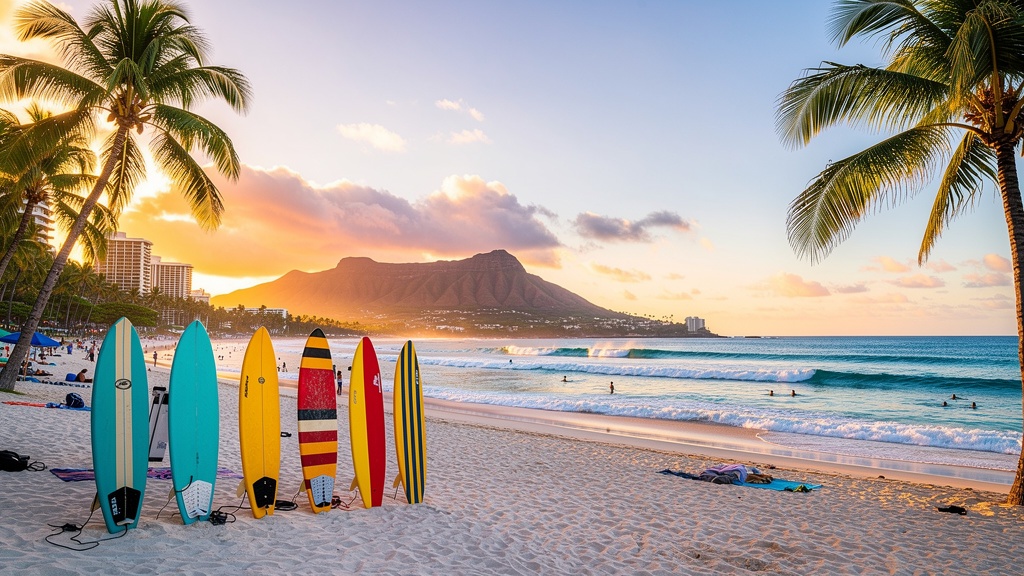
Waikiki Beach at golden hour with Diamond Head volcano in the background, surfboards and palm trees on white sand
📍 Waikiki Beach, Oahu

Oahu: Where Modern Hawaii Meets Ancient Spirit

Oahu, nicknamed "The Gathering Place," is Hawaii's most visited island and home to the state capital, Honolulu. Yet despite its urban sophistication, Oahu retains an unmistakably Hawaiian soul. The world-famous Waikiki Beach stretches along its south shore, framed by the iconic Diamond Head volcanic crater — a silhouette that has become synonymous with tropical paradise.

Beyond Waikiki's resort strip lies a complex, multi-layered island waiting to be discovered. The windward coast features lush valleys and some of the state's most beautiful beaches. The North Shore, legendary among surfers worldwide, transforms each winter into a theatre for the planet's most spectacular wave riding, with massive swells at Banzai Pipeline drawing crowds from across the globe.

History runs deep on Oahu. Pearl Harbor, site of the pivotal 1941 attack that drew the United States into World War II, stands as one of America's most significant historical memorials. The Bishop Museum houses the world's finest collection of Hawaiian and Pacific artifacts, offering an immersive journey through the islands' pre-contact past.

  • Waikiki Beach — one of the world's most recognizable shorelines
  • Pearl Harbor National Memorial — a profound piece of American history
  • North Shore surf mecca with world-class winter swells
  • Vibrant Chinatown district with galleries, markets, and nightlife
Discover the Beaches
6+
Visitor Islands to Explore
60+
Miles of White Sand Beaches
1,500
Miles of Island Chain
10M+
Annual Visitors

Choose Your Hawaiian Adventure

Each of Hawaii's main islands offers a completely different travel experience, from adventure-packed wilderness to refined luxury escapes.

Waikiki Beach on Oahu with Diamond Head crater and palm trees
Most Visited Island

Oahu — The Gathering Place

Hawaii's urban heart balances big-city amenities with natural beauty. Home to Waikiki, Pearl Harbor, and the legendary North Shore surf scene, Oahu is a study in contrasts that satisfies every type of traveler.

Explore Oahu →
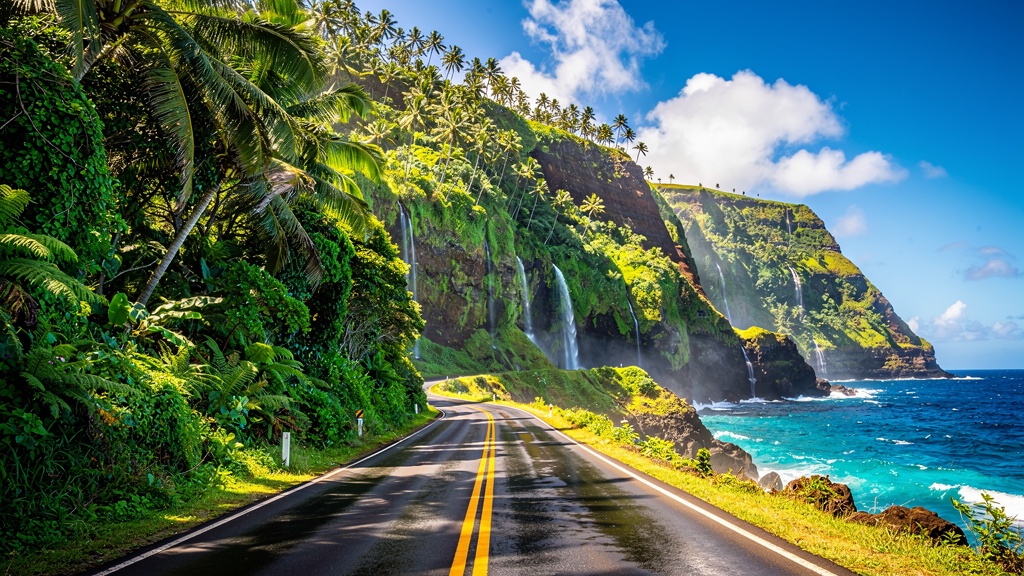
Winding Road to Hana on Maui through lush tropical rainforest
Valley Isle

Maui — Romance & Adventure

Consistently voted the world's best island, Maui enchants with its pristine beaches, the dramatic Road to Hana, whale watching in winter, and the surreal summit of Haleakalā volcano rising above the clouds.

Explore Maui →
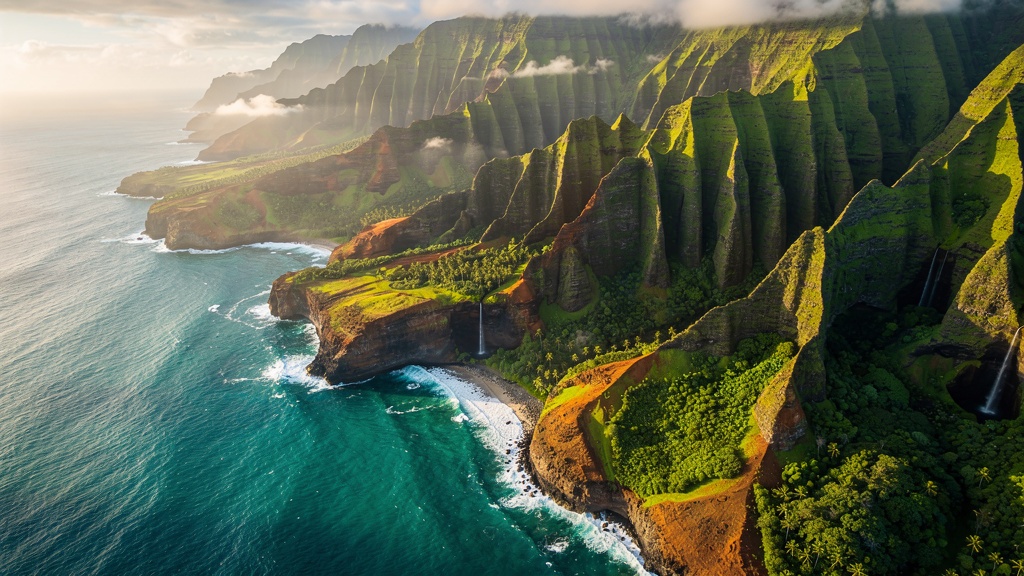
Na Pali Coast on Kauai with dramatic sea cliffs and turquoise ocean
Garden Isle

Kauai — Wild & Untamed

The oldest of the main Hawaiian islands, Kauai is a paradise for nature lovers. Its spectacular Na Pali Coast, Waimea Canyon, and verdant Hanalei Valley have made it one of the world's most photographed destinations.

Explore Kauai →
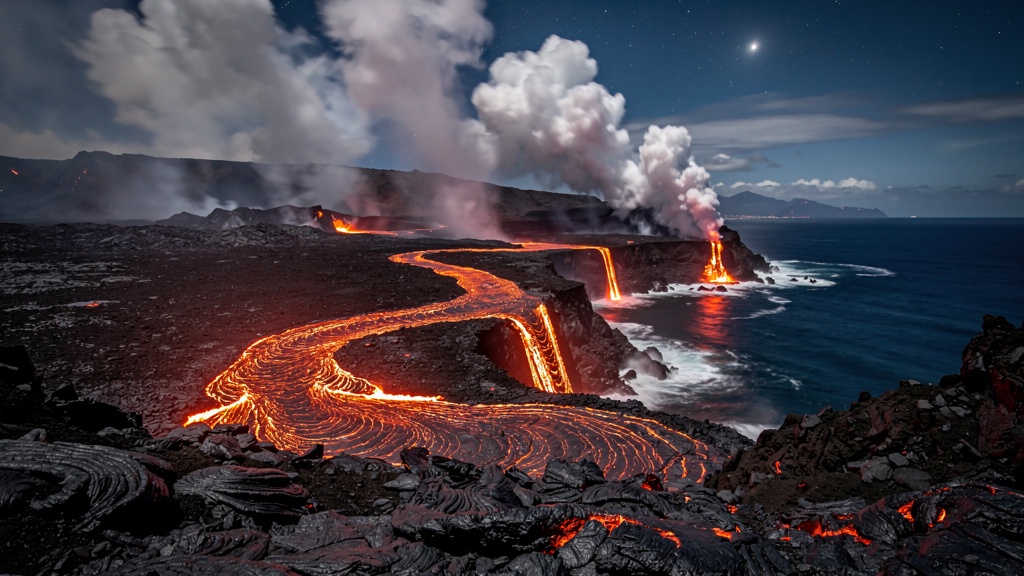
Kilauea volcano eruption at night on the Big Island of Hawaii
Big Island

Hawaii Island — Born of Fire

The Big Island is simultaneously the youngest and largest of the Hawaiian islands, and it's still growing. Watch lava flow into the sea at Hawaii Volcanoes National Park, snorkel with manta rays, and stargaze from Mauna Kea's 14,000-foot summit.

Explore Big Island →
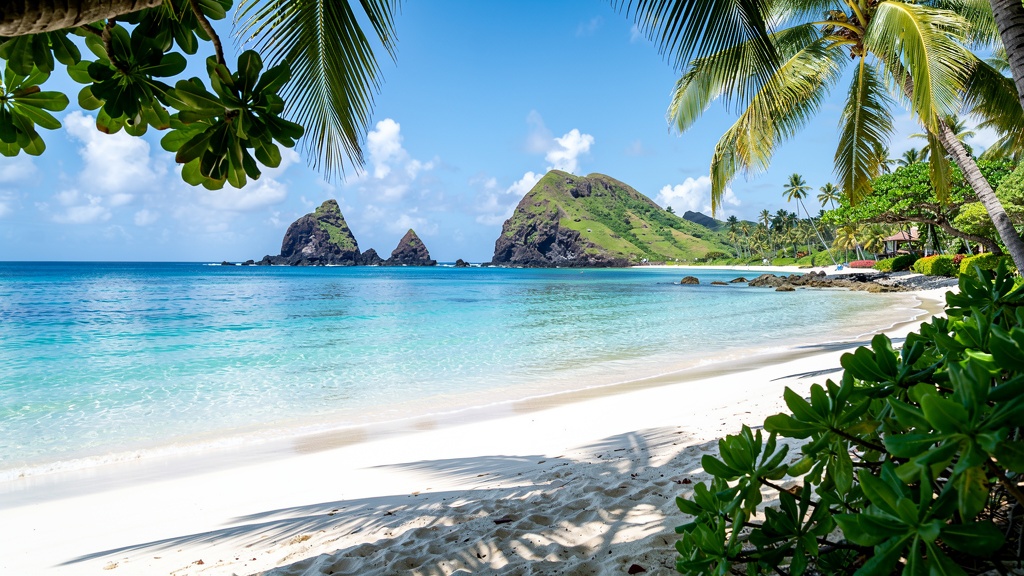
Pristine white sand beach in Hawaii with calm turquoise water
Friendly Isle

Molokai — Authentic Hawaii

For those seeking the Hawaii that tourism largely overlooked, Molokai delivers a raw, authentic experience. This island moves at its own pace, offering the world's tallest sea cliffs, uncrowded beaches, and a deep immersion in traditional Hawaiian community life.

Explore Molokai →
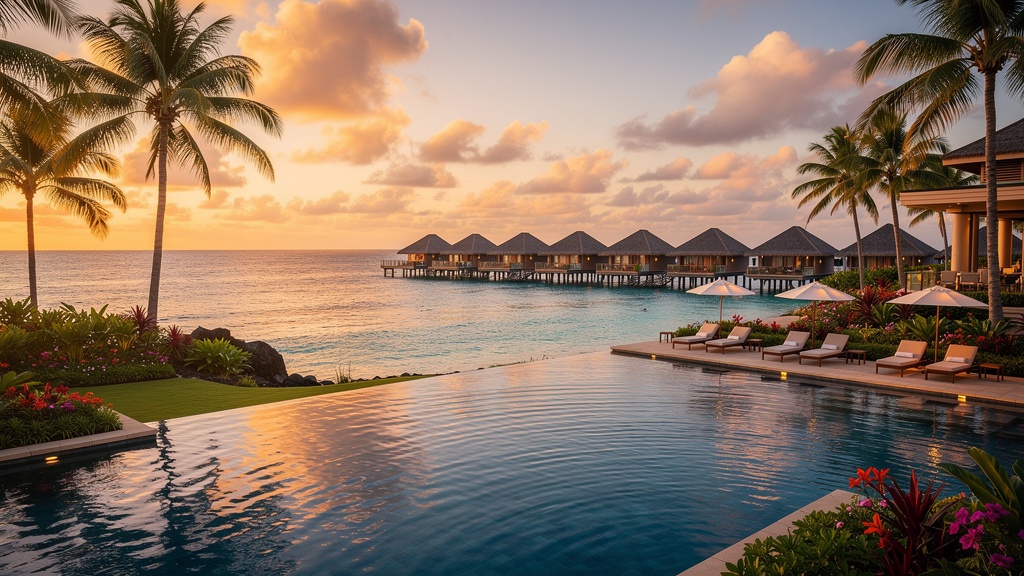
Luxury infinity pool at a Hawaiian resort overlooking the Pacific Ocean
Pineapple Isle

Lanai — Private Paradise

Once dominated by pineapple plantations and now largely owned by tech billionaire Larry Ellison, Lanai offers an exclusive escape. Two ultra-luxury resorts, pristine snorkeling, and the eerie Keahiakawelo rock garden make it one of Hawaii's most intriguing islands.

Explore Lanai →

Waimea Canyon: The Grand Canyon of the Pacific

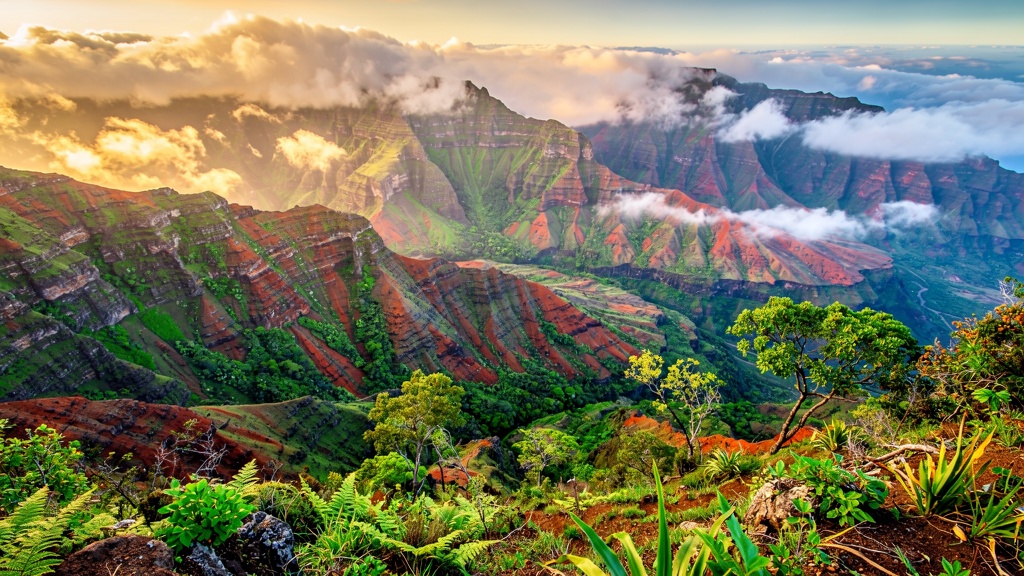
Stretching ten miles long and reaching depths of more than 3,600 feet, Waimea Canyon on the western coast of Kauai is one of Hawaii's most awe-inspiring natural spectacles. Carved over millions of years by the erosive forces of the Waimea River and accentuated by the collapse of a volcanic shield, this dramatic gorge reveals geological layers in rich shades of red, orange, and green.

Mark Twain reportedly called it the "Grand Canyon of the Pacific," and the comparison is apt. Yet Waimea Canyon has a character entirely its own — draped in tropical vegetation, punctuated by cascading waterfalls, and frequently wreathed in mist that rolls in from the Na Pali Coast. Nēnē geese, Hawaii's state bird and once on the brink of extinction, are commonly spotted along the canyon's rim.

The canyon is the centerpiece of Waimea Canyon State Park, which connects with Koke'e State Park to the north. Together they encompass over 4,000 acres of wilderness, offering some of the finest hiking in Hawaii. The Awaawapuhi Trail rewards hikers with a vertiginous view of the Na Pali Coast 2,500 feet below, while the Kukui Trail descends into the canyon itself for a close-up encounter with its ancient geology.

Early mornings and late afternoons provide the most dramatic lighting conditions, when the sun catches the canyon walls and transforms them into a canvas of glowing copper and crimson. The famous Pu'u Hinahina Lookout and Waimea Canyon Lookout offer accessible panoramic views for visitors who prefer to appreciate the spectacle from above.

  • 10 miles long and over 3,600 feet deep — Hawaii's largest canyon
  • Accessible lookout points along Highway 550 (Waimea Canyon Drive)
  • Multiple hiking trails from gentle rim walks to challenging canyon descents
  • Wildlife spotting: Nēnē geese, Hawaiian honeycreepers, and more
Dramatic Waimea Canyon on Kauai with red canyon walls, lush tropical vegetation, and misty clouds
📍 Waimea Canyon, Kauai

Your Complete Island Guide

Dive deeper into every aspect of a Hawaiian vacation with our expertly crafted guides covering every topic from surf to plate.

Lanikai Beach on Oahu with white sand and calm turquoise water
Nature

Beaches & Coastlines

Hawaii boasts some of the world's most diverse and breathtaking beaches. From the powdery white sands of Lanikai to the dramatic black lava shores of Punalu'u, every beach tells a different geological story. We cover the 20 best beaches across all islands, including secret spots that most visitors never discover.

Read Beach Guide →
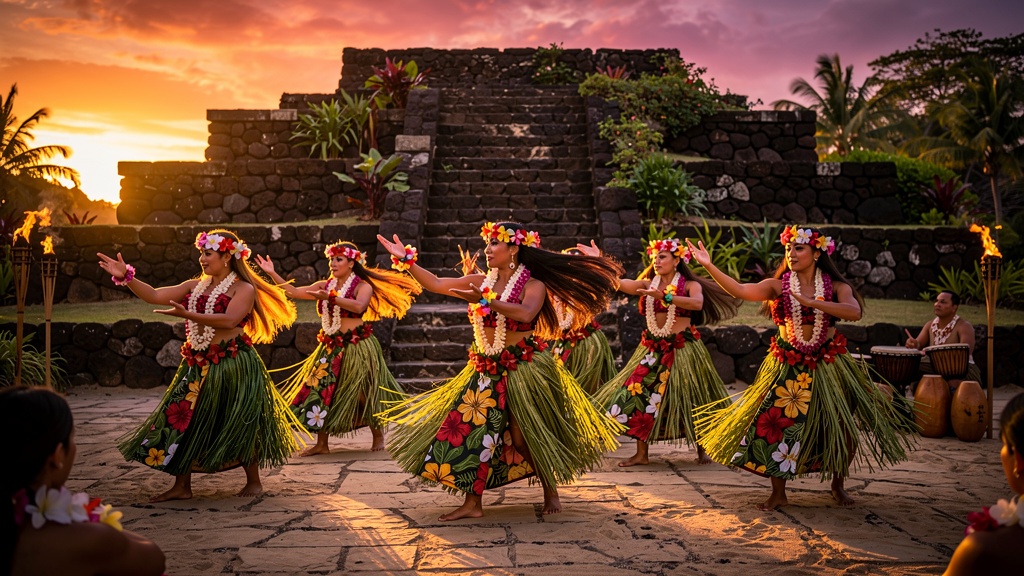
Traditional Hawaiian hula dance performance with lei garlands and tiki torches at sunset
Heritage

Culture & History

The story of Hawaii is one of Polynesian voyaging, royal kingdoms, missionary influence, plantation immigration, and eventual statehood. Understanding this layered history enriches every aspect of your visit. From hula to heiau, from luau to language — Hawaii's cultural identity is unique, vibrant, and still very much alive.

Read Culture Guide →
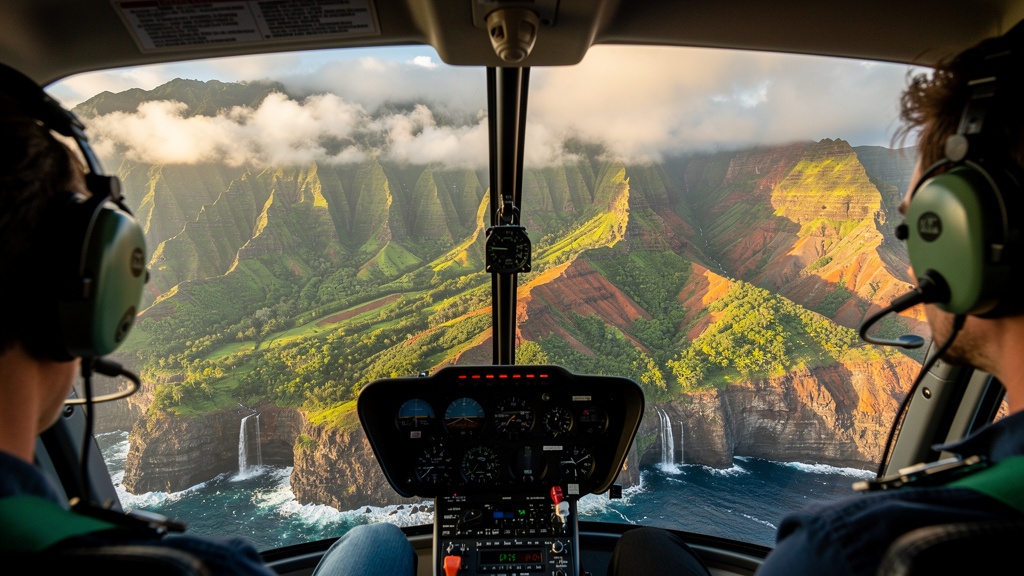
Helicopter tour over Hawaii's dramatic coastline and valleys
Adventure

Activities & Adventures

Hawaii is one of the world's great adventure destinations. Surf iconic waves, trek into volcanic craters, zip-line over rainforest canopies, dive with whale sharks, or simply kayak along a tranquil coast. Whether your idea of adventure is gentle snorkeling or multi-day wilderness hiking, Hawaii delivers.

Read Activities Guide →
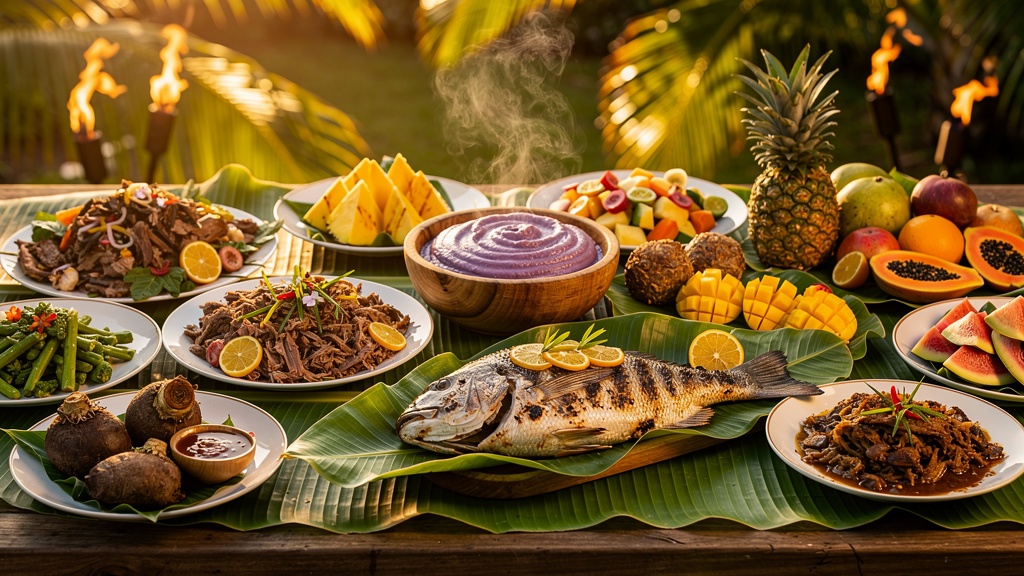
Traditional Hawaiian luau feast with fresh tropical foods on banana leaves
Cuisine

Food & Dining

Hawaiian cuisine is a magnificent fusion born from the islands' multicultural heritage. Portuguese malasadas, Japanese sushi bowls, Korean plate lunches, Filipino chicken adobo, and traditional Hawaiian poke — the dining scene is endlessly eclectic. We guide you through the best restaurants, food trucks, farmers' markets, and culinary experiences across the islands.

Read Dining Guide →

Fifteen Compelling Reasons to Visit Hawaii in 2026

Still on the fence? Here's why the Hawaiian Islands should be at the very top of your travel bucket list this year.

1. Unrivaled Natural Diversity in a Compact Space

Few places on Earth pack as much natural variety into as small a space as Hawaii. Within a single island visit, you can wake up to the chill of a volcano summit, spend your afternoon swimming in a warm bay, and end your day watching the sun sink into the Pacific from a black sand beach. Hawaii contains 11 of the world's 13 climate zones, from tropical rainforest to subarctic — a phenomenon driven by its dramatic topography and the prevailing trade winds.

On the Big Island alone, you can visit an active volcano, explore a lava tube, swim with manta rays at night, hike through lush rainforest, drive through a high-altitude desert, and surf. On Maui, the Haleakalā volcano creates its own microclimate system, with the summit often sitting above the clouds while the coast basks in sunshine. This extraordinary diversity means that Hawaii is a destination you could visit a dozen times and always discover something entirely new.

2. World-Class Year-Round Weather

Hawaii is blessed with one of the most agreeable climates on the planet. Average temperatures range from around 75°F (24°C) in the cooler winter months to around 88°F (31°C) in summer, moderated by the constant northeast trade winds that provide natural air conditioning. Unlike many tropical destinations, Hawaii avoids the extremes of a harsh wet season. There are drier periods and wetter periods, but rain typically comes in short showers rather than prolonged deluges, and it often rains on one side of an island while the other remains sunny.

Ocean water temperatures hover between 73°F and 80°F (23–27°C) year-round, making swimming, snorkeling, and diving possible in any month. This consistent warmth is particularly appealing for travelers from colder climates looking to escape harsh winters, but Hawaii is equally rewarding during summer months when the trade winds keep the heat comfortable.

3. The Aloha Spirit Is Real and Transformative

The concept of "aloha" extends far beyond its role as a greeting. In Hawaiian philosophy, aloha encapsulates a profound set of values: compassion, patience, unity, humility, and kindness. The Aloha Spirit Law, enacted in 1986, actually requires Hawaii state employees to embrace this philosophy in their work — and visitors consistently report feeling its genuine warmth throughout their time on the islands.

This spirit manifests in countless small ways: the local who stops to help you with directions, the market vendor who shares the story behind each ingredient, the surfer who encourages a beginner in the water, and the hotel staff who greets you as part of the family. Hawaii has a way of slowing visitors down, encouraging a deeper presence, and fostering genuine human connection that is increasingly rare in modern travel.

4. Marine Life Beyond Imagination

Hawaii sits in the middle of the Pacific Ocean, surrounded by deep, clear, warm water teeming with extraordinary marine biodiversity. The Hawaiian monk seal, one of the world's most endangered marine mammals, can be spotted resting on remote beaches. Hawaiian green sea turtles (honu), considered sacred in Hawaiian culture, are commonly seen swimming in shallow bays and occasionally basking on sandy shores.

Humpback whales migrate to Hawaiian waters from Alaska every winter (November through May) to breed and give birth, with Maui's Auau Channel hosting the highest concentration. Watching a 45-ton whale breach just a few hundred meters from your boat is an experience that stays with you forever. Spinner dolphins are a year-round presence, frequently riding the bow waves of boats and putting on acrobatic displays in bays and coves.

5. The Most Isolated Architecture of Culture in the World

Located approximately 2,400 miles from the nearest continent, the Hawaiian Islands developed in remarkable geographic isolation for centuries before Western contact in 1778. This isolation allowed Hawaiian culture to evolve in a completely unique direction, creating a sophisticated society with its own language, religion, social structure, navigation methods, agricultural systems, and artistic traditions.

The ancient Hawaiians were among the world's greatest navigators, using stars, ocean swells, bird behavior, and cloud patterns to guide their canoes across thousands of miles of open ocean. Their voyaging canoes were engineering marvels, capable of carrying dozens of people with food, water, plants, and animals for trans-Pacific crossings. Understanding this heritage gives every visit to Hawaii a profound historical depth that transforms the experience from a beach vacation into a genuine cultural journey.

6. Incredible Food Culture and Farm-Fresh Ingredients

Hawaii's food culture is as diverse and fascinating as its landscape. The islands' multicultural heritage has created a culinary melting pot unlike anything found elsewhere in the United States. Hawaiian plate lunch culture — a uniquely local institution combining a protein (perhaps teriyaki chicken or kalua pig), two scoops of rice, and macaroni salad — reflects the blended immigrant heritage of the plantation era.

Modern Hawaiian cuisine has evolved into a sophisticated farm-to-table movement that capitalizes on the islands' extraordinary agricultural abundance. Hawaii grows over 200 varieties of taro, the crop that was central to ancient Hawaiian civilization. Local farms produce macadamia nuts, coffee (Kona coffee is among the world's finest), tropical fruits, vanilla, cacao, and countless vegetables that rarely appear on mainland American menus. Chefs across the islands are increasingly celebrating this local bounty in menus that are both deeply rooted in tradition and thrillingly contemporary.

7. Exceptional Stargazing Opportunities

Mauna Kea on the Big Island rises 13,796 feet above sea level, making it the highest point in Hawaii and one of the world's premier astronomical observatories. Positioned above 40% of Earth's atmosphere, with low humidity, minimal light pollution, and exceptional atmospheric stability, the summit hosts thirteen of the world's most advanced research telescopes.

Visitor programs operate at the Onizuka Center for International Astronomy at around 9,000 feet elevation, where ranger-guided evening stargazing sessions are offered on clear nights. The view of the Milky Way from Mauna Kea is simply staggering — a river of stars stretching from horizon to horizon with clarity that most people in the modern world have never experienced. Even at lower elevations, the dark skies of Hawaii's more remote areas offer extraordinary stargazing compared to the light-polluted mainland.

Essential Hawaii at a Glance

✈️

Getting There

Direct flights from the US mainland to Honolulu (HNL) take 5–6 hours from the West Coast and 10–11 hours from the East Coast. Inter-island flights connect all major islands in 20–50 minutes.

🌡️

Climate

Warm and tropical year-round. Average 80°F (27°C). December–March is wetter on windward coasts; May–September is drier. Trade winds keep temperatures comfortable.

💰

Budget Tips

Hawaii is expensive but manageable with planning. Self-catering, food trucks, and state beach parks dramatically reduce costs. Book accommodations 3–6 months ahead for best rates.

🕐

Time Zone

Hawaii Standard Time (HST) is UTC-10. Hawaii does not observe Daylight Saving Time, so the time difference with mainland US varies seasonally.