Understanding Hawaii's Cultural Identity
Hawaii is not merely a geographical destination — it is a living cultural universe with roots stretching back over 1,500 years to the first Polynesian voyagers who discovered and settled these islands in the middle of the Pacific Ocean. To visit Hawaii with any depth of understanding is to engage with one of humanity's most remarkable stories: of navigation, adaptation, royalty, spiritual devotion, cultural near-extinction, and remarkable renaissance.
The culture of Native Hawaiians, known as kānaka maoli, is anchored in a profound relationship with the land, ocean, and sky. The concept of aloha ʻāina — love of the land — is not a slogan but a philosophical framework that governed every aspect of traditional Hawaiian society, from agriculture and fishing to governance and spirituality. This connection to place is still palpable today, in the sound of the hula, the scent of plumeria, the sight of a fisherman casting a net at dawn, and in the deep pride with which contemporary Hawaiians carry their cultural identity.
Understanding Hawaii's culture also means acknowledging the tremendous disruption that followed Western contact in 1778. Within a century of Captain Cook's arrival, the Hawaiian population had been devastated by disease, traditional land management systems had been dismantled, and the Hawaiian language had been suppressed in schools. The cultural renaissance of the 1970s — which saw the revival of the Hawaiian language, the renaissance of traditional voyaging, and a renewed pride in indigenous identity — is one of the most inspiring stories of cultural recovery in modern history.
Hula: The Living Language of Hawaiian Culture
Of all the art forms created by the Hawaiian people, hula is the most immediately recognizable and the most profoundly meaningful. More than a dance, hula is a complete system of knowledge transmission — a living library that preserves genealogies, historical events, religious stories, observations of nature, and expressions of human emotion in a form that can be passed from generation to generation without written language.
The ancient form of hula, known as hula kahiko, was performed in ceremonies devoted to the gods, accompanied by chant (oli or mele) and the rhythmic sound of gourd rattles (ipu), knee-drums (pahu), and feathered rattles (uli'uli). The movements were precise and codified, each gesture carrying specific meaning. A movement of the hand could describe the movement of waves; a footstep could mark the rhythm of a heartbeat; a bend of the torso could convey the swaying of a palm tree in the wind.
After Western contact, hula entered a period of dramatic cultural disruption. Christian missionaries who arrived in Hawaii in the 1820s viewed hula as pagan and immoral, and their influence contributed to banning public performances for decades. King Kalakaua, who reigned from 1874 to 1891 and became known as the Merrie Monarch, championed the revival of hula as an essential expression of Hawaiian identity, bringing it back from near-extinction. Today, his legacy is honored by the Merrie Monarch Festival held annually in Hilo on the Big Island — the most prestigious hula competition in the world.
Modern hula, known as hula ʻauana, developed in the 20th century as a more accessible form that incorporated Western musical influences, using guitars and ukuleles as accompaniment. While hula ʻauana is more familiar to visitors through hotel performances and tourist shows, the distinction between this and the sacred hula kahiko is important and respected within the community. Both forms are taught in hula schools (halau hula) across the islands, with master teachers (kumu hula) dedicating their lives to preserving and transmitting the complete tradition.
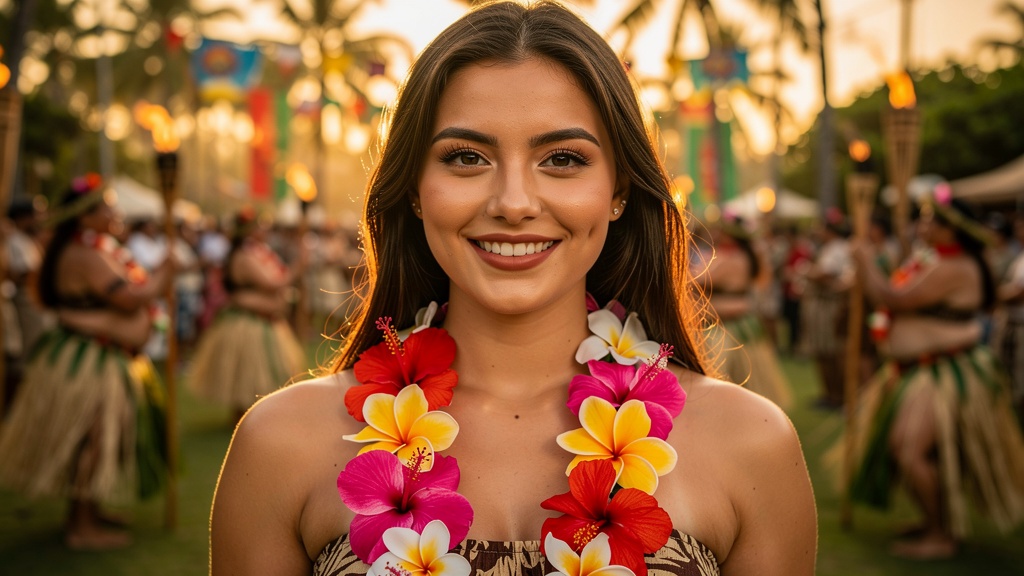
The Lei: Hawaii's Symbol of Aloha
The lei — a garland of flowers, leaves, shells, or feathers — is perhaps the most universally recognized symbol of Hawaiian culture. In Hawaiian tradition, the giving of a lei is an act of profound generosity and love, a physical expression of the aloha spirit. Each type of lei carries specific meaning and is appropriate for different occasions and relationships.
- Pikake (jasmine) lei — romantic love and weddings
- Kukui nut lei — enlightenment and protection
- Maile leaf lei — royalty, sports, and formal occasions
- Plumeria lei — welcome and hospitality
- Ilima lei — Hawaiian royalty (each lei requires 500+ blossoms)
Pearl Harbor: Hawaii's Most Solemn Historical Site
On the morning of December 7, 1941, the quiet of Pearl Harbor — the US Navy's Pacific fleet headquarters on Oahu — was shattered by a surprise attack by the Imperial Japanese Navy. The attack, which came in two waves over approximately two hours, sank or damaged 20 naval vessels including eight battleships, destroyed nearly 200 aircraft, and killed 2,403 Americans. It was the event that propelled the United States into World War II and irrevocably changed the course of global history.
Today, the Pearl Harbor National Memorial encompasses several distinct historic sites that together offer one of the most comprehensive World War II memorial experiences in the world. The USS Arizona Memorial, built directly over the sunken battleship, is the most visited and emotionally powerful. The Arizona still lies where it sank, with the names of the 1,177 sailors and marines who perished aboard her inscribed on a marble wall. Oil still seeps from the hull today — what some call the "tears of the Arizona."
Admission to the USS Arizona Memorial is free, but time-slot reservations are required and should be made months in advance. The memorial is accessible only by boat from the Pearl Harbor Visitor Center, and the short journey across the harbor is itself a moment for reflection. The silence maintained on the memorial is not imposed — it arises naturally from the gravity of what visitors are standing above.
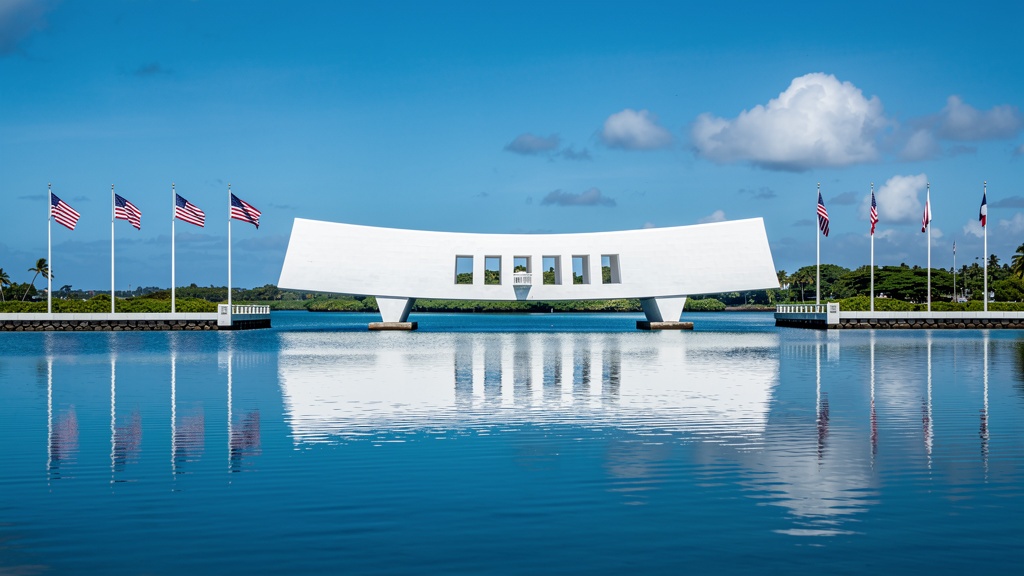
Visiting Pearl Harbor
- USS Arizona Memorial — free, reservations essential
- Battleship Missouri (USS Missouri) — where WWII ended (Sept. 2, 1945)
- Pacific Aviation Museum — displays over 50 historic aircraft
- USS Bowfin Submarine Museum — WWII submarine open for touring
- Pearl Harbor Visitor Center — free entry, exhibits, film
- Allow a full day to do justice to all four sites
Pele and the Volcanic Mythology of Hawaii
In Hawaiian cosmology, Pele — the goddess of volcanoes, fire, and creation — is one of the most powerful and revered of all the deities. Her story is deeply intertwined with the geological reality of the Hawaiian Islands themselves. According to tradition, Pele arrived in Hawaii by canoe from the mythical homeland of Kahiki, seeking a permanent home. She traveled through the chain of islands from northwest to southeast, digging fire pits and trying to establish herself, until she found her permanent home in the Kilauea volcano on the Big Island, where she is believed to reside to this day.
Understanding Pele's mythology is not merely an intellectual exercise for visitors — it is a window into how ancient Hawaiians made sense of the extraordinary geological forces that created and continue to shape their islands. The ongoing volcanic activity on the Big Island is not, in the Hawaiian worldview, a purely geological phenomenon; it is Pele at work, creating new land, destroying what stands in her path, and exercising her divine authority over the landscape.
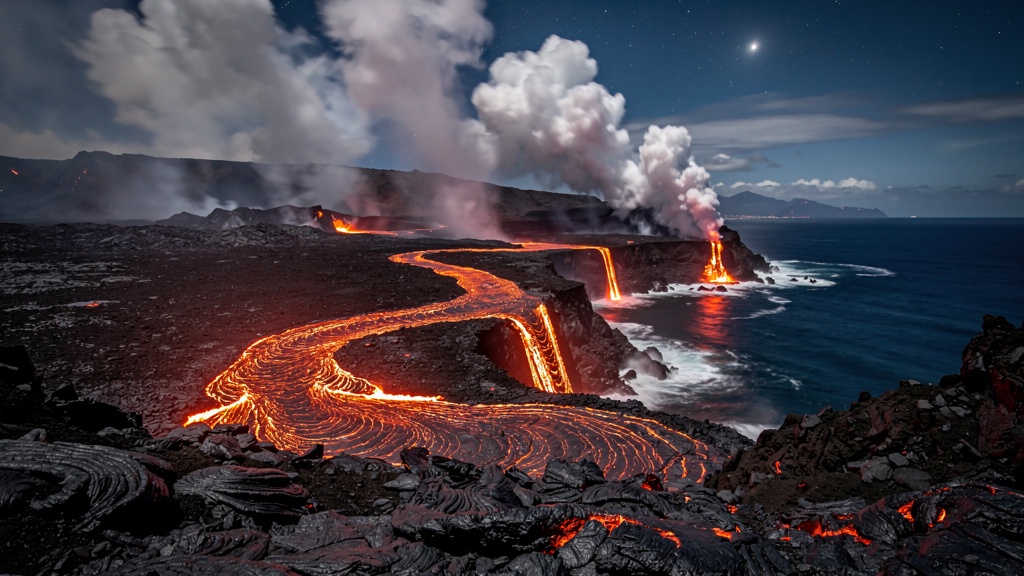
Hawaii Volcanoes National Park
Established in 1916, this UNESCO World Heritage Site encompasses the most accessible active volcanic landscape on Earth. It offers visitors the extraordinary opportunity to observe geological creation in real time.
- UNESCO World Heritage Site since 1987
- Kilauea — one of the world's most active volcanoes
- Thurston Lava Tube — spectacular 500-year-old lava tunnel
- Halemaumau Crater — sacred to the goddess Pele
- Chain of Craters Road — 19-mile drive through volcanic landscape
- Kilauea Iki Trail — hike across a cooled lava lake
The Hawaiian Language Revival: A Cultural Renaissance
At its nadir in the 1970s, the Hawaiian language (ʻŌlelo Hawaiʻi) was spoken fluently by fewer than 2,000 people — almost all of them elderly. The suppression of Hawaiian language in schools following the illegal overthrow of the Hawaiian monarchy in 1893 had come close to achieving what no invader in all of Hawaiian history had managed: the complete extinction of a language that had carried the entire intellectual and spiritual heritage of a civilization for over a thousand years.
The Hawaiian language revival that began in the 1970s and accelerated through the 1980s and 1990s is now widely regarded as one of the most successful endangered language revitalization efforts in the world. The creation of Pūnana Leo (language nest) immersion preschools in 1984, followed by Hawaiian-medium elementary and secondary schools (known as Kula Kaiapuni), has created a new generation of fully fluent Hawaiian speakers for the first time in decades.
Today, Hawaiian is an official language of the state of Hawaii alongside English, and the language appears on street signs, government buildings, and in the names of businesses, schools, and organizations across the islands. Place names throughout Hawaii are Hawaiian — Honolulu (protected harbor), Waikiki (spouting fresh water), Haleakalā (house of the sun) — and understanding their meanings adds enormous richness to exploring the landscape.
The Luau: Hawaii's Great Communal Feast
The luau is one of Hawaii's most iconic cultural experiences, and its origins are deeply rooted in Hawaiian tradition. The word "luau" specifically refers to the young taro leaves used in traditional Hawaiian cooking, but over time it has come to describe the whole feast celebration in which these and many other foods are shared. Ancient Hawaiian feasts, known as ʻahaʻaina, were elaborate affairs that could last for days, featuring foods cooked in an underground oven (imu), performances of hula, and the recitation of chants honoring the gods and ancestors.
The centerpiece of most luau is kalua pig — a whole pig wrapped in ti leaves and slow-cooked in an imu for many hours. The result is extraordinarily tender, smoky meat that falls easily from the bone and has a flavor profile unlike any other cooking method. At traditional luau events, the opening of the imu is a ceremony in itself, with the steam rising dramatically as the earth is opened and the aromas released after hours of slow cooking.
For visitors, there are two very different luau experiences available in Hawaii. Commercial luau, operated by hotels and tour companies, offer a reliable and entertaining introduction to Hawaiian food, music, and hula in a setting designed for tourist comfort. These range from the modest to the truly spectacular — the Old Lahaina Luau on Maui and the Feast at Lele are frequently cited as among the finest in the state. Traditional luau, organized by local families for celebrations such as first birthdays, graduations, or weddings, are rarer experiences for visitors but infinitely more authentic when the opportunity arises.
Ancient Hawaiian Sites: Reading the Landscape's Story
The pre-contact Hawaiian landscape was populated with heiau (temples), fishponds, lo'i (taro paddies), ahupua'a (land management units), and petroglyphs that together represent one of the most sophisticated systems of landscape management and spiritual organization in the Pacific. Visiting these sites connects modern travelers to a world that functioned with remarkable complexity in the absence of metal tools, written language, or outside trade.
Pu'uhonua o Hōnaunau National Historical Park on the Big Island's Kona Coast is one of the best-preserved and most significant ancient Hawaiian sites. Once a place of refuge (pu'uhonua) where those who had broken a kapu (taboo) could seek absolution and where defeated warriors and ordinary people could find sanctuary in times of war, the site includes royal fishponds, massive stone platforms, reconstructed thatched structures, and ki'i pohaku (wooden ki'i) guarding the boundary of the sacred grounds. The atmosphere here is genuinely evocative — something about the scale of the stonework and the sound of the sea creates a tangible sense of the past.
The Puako Petroglyph Archaeological District in the South Kohala district of the Big Island contains over 3,000 individual images carved into the smooth pahoehoe lava — one of the largest collections of petroglyphs in all of Hawaii and in the entire Pacific. Human figures, turtles, canoes, and abstract forms are carved at varying depths and in various styles, representing work from different periods over many centuries. A one-mile walking trail through the lava field brings visitors to the main concentration of images, which are best seen in early morning or late afternoon light when shadows reveal their three-dimensional depth.
Hawaii's Royal Heritage: The Kingdom of Hawai'i
Between 1795 and 1893, Hawaii was a fully recognized independent kingdom with a constitutional monarchy modeled partly on European examples. Established by Kamehameha the Great, who united the previously warring islands through a combination of political genius, military prowess, and strategic alliance, the Kingdom of Hawai'i was one of the most sophisticated and diplomatically active indigenous governments in the 19th-century Pacific world.
Kamehameha I had a remarkable ability to selectively adopt Western technologies and trade while maintaining the essential framework of Hawaiian governance and culture. Under his reign and those of his successors, Hawaii established diplomatic relations with multiple foreign nations, operated a functional postal service, maintained a standing army and navy, and developed a constitutional government complete with a legislature and supreme court. The Hawaiian kingdom's story is remarkable and complex — a civilization navigating the enormous pressures of Western expansion with intelligence, flexibility, and dignity.
'Iolani Palace in downtown Honolulu, completed in 1882, was the official residence of Hawaii's last monarchs: King Kalakaua and his sister, Queen Lili'uokalani. The palace was at the cutting edge of Victorian-era technology when built, equipped with electric lights and telephones before even the White House in Washington. In 1893, Queen Lili'uokalani was overthrown by a group of American businessmen and sugar planters backed by US Marines, an act of regime change that President Grover Cleveland subsequently called illegal and unjust — but which was never reversed. The palace served as a government building for decades after annexation and was later restored to its original splendor.
When engaging with Hawaiian cultural sites and traditions, remember: ask before photographing cultural performances, remove shoes when entering sacred spaces or private homes, treat petroglyphs and heiau with reverence (never climb on them), and approach all wildlife — including turtles and monk seals — with respectful distance. Hawaiian culture places deep value on humility and respect.
Contemporary Hawaiian Identity: Pride, Sovereignty, and Resilience
The question of Hawaiian sovereignty — the political and legal status of Native Hawaiians and their rights to self-determination — is one of the most significant and complex ongoing conversations in the state. Following the 1993 Apology Resolution, in which the US Congress formally apologized for the illegal overthrow of the Hawaiian monarchy, Native Hawaiian political advocacy has grown considerably, with various groups advocating for different forms of recognition, from a nation-within-a-nation model to full independence.
Regardless of where political developments lead, what is already undeniable is the extraordinary cultural renaissance that Native Hawaiians have achieved. The revival of traditional navigation — culminating in the Polynesian Voyaging Society's remarkable voyages of the double-hulled canoe Hokulea, which has circumnavigated the globe using only traditional wayfinding — stands as a monument to Hawaiian intellectual achievement and cultural tenacity. The hula revival, the Hawaiian language recovery, the renaissance of traditional Hawaiian agriculture including the cultivation of over 200 taro varieties — all speak to a culture that refused to be extinguished.
Visitors to Hawaii who engage respectfully with this living cultural reality — who take time to learn a few words of Hawaiian, who attend a hula performance with genuine curiosity, who visit historical sites with thoughtful preparation, and who spend their tourist dollars at Native Hawaiian-owned businesses — contribute positively to this remarkable ongoing story.