Hawaii's Extraordinary Food Culture
Hawaiian cuisine is one of the most fascinating and least understood food cultures in America. Born from the extraordinary confluence of indigenous Hawaiian traditions and the wave of immigrant labor that transformed the islands during the plantation era, the food of Hawaii reflects Chinese, Japanese, Korean, Filipino, Portuguese, Puerto Rican, and Southeast Asian influences, all layered over an agricultural base of extraordinary tropical richness. The result is a food culture of remarkable depth, variety, and flavor.
Understanding Hawaiian food means understanding the concept of "local food" — a category that is entirely distinct from both Hawaiian traditional cuisine and mainland American cooking. Local food in Hawaii is the food that emerged from the plantation-era immigrant communities: plate lunches built from meat and two scoops of rice, crack seed shops selling Chinese-style preserved fruits, malasadas (Portuguese donuts), saimin noodle soup, and shave ice. These dishes represent the democratic fusion of a multicultural working-class food culture, and they remain deeply embedded in island life regardless of income or social status.
The Traditional Hawaiian Luau Feast
The luau feast is at once the most accessible and the most culturally significant window into Hawaiian food traditions. The word "luau" technically refers to the young taro leaves (cooked as a spinach-like green, often in coconut cream), but it has come to describe the entire celebratory feast tradition. A proper Hawaiian luau draws on the full repertoire of traditional Hawaiian cooking methods and ingredients, most of which have their roots in the ancient agricultural and fishing economy of the islands.
The undisputed centerpiece of any authentic luau is kalua pig — an entire pig marinated in Hawaiian sea salt, wrapped in ti leaves, and slow-roasted for 10 to 16 hours in an imu, the traditional underground oven. The imu consists of a pit lined with rocks that have been heated by burning wood, and then covered with banana leaves and earth to trap the heat. The result is pork of extraordinary tenderness and a distinctive smokiness from the volcanic rocks and leaves. At the commercial luau events that cater to visitors, the opening of the imu — with its dramatic plumes of steam and the gradual revelation of the cooked pig — is the theatrical highlight of the evening.
Beyond kalua pig, a traditional Hawaiian feast includes poi — a starchy, slightly fermented paste made from pounded taro root that has been the staple food of Hawaii for over a thousand years. Poi's mild, slightly sour flavor is an acquired taste for many mainland visitors, but it plays a central nutritional and ceremonial role in Hawaiian culture. Fresh poke (marinated raw fish), lomi lomi salmon (massaged salted salmon with tomatoes and green onions), haupia (coconut cream pudding cut into cubes), and sweet potato are other essential elements of the traditional Hawaiian table.
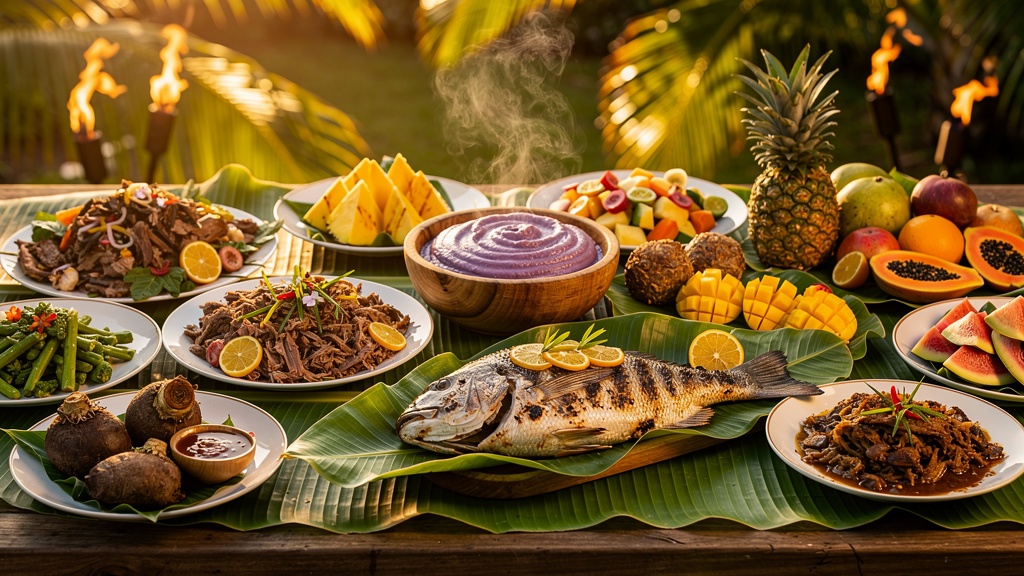
Classic Hawaiian Luau Dishes
- Kalua pig — imu-smoked whole pig, utterly tender
- Poi — taro root paste, the Hawaiian staple grain
- Fresh poke — raw fish cubed and marinated in soy and sesame
- Lomi lomi salmon — salted salmon, tomato, and onion salad
- Haupia — chilled coconut cream pudding
- Sweet potato — baked or steamed, naturally sweet
- Laulau — pork wrapped in taro leaves and steamed
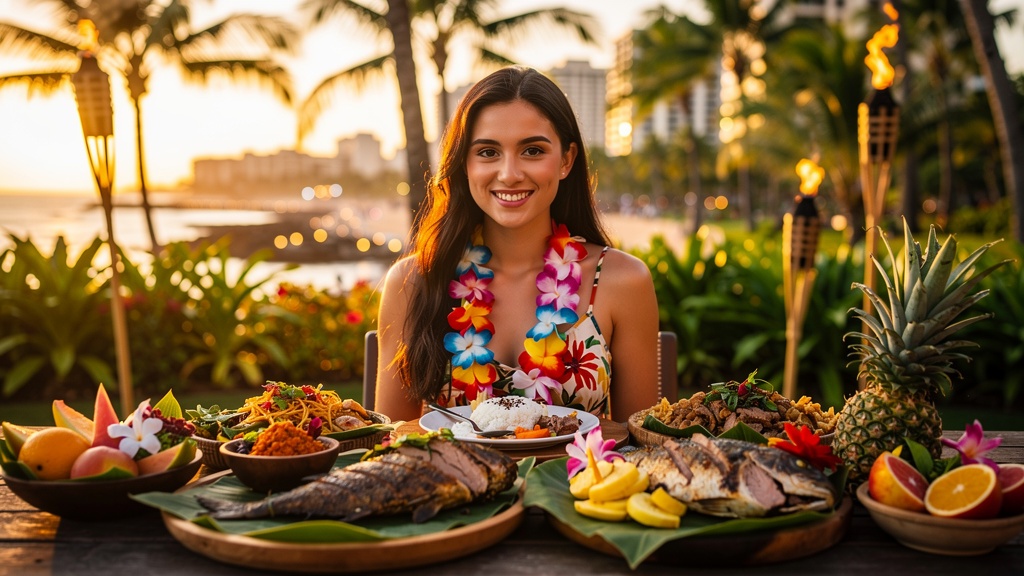
Top Luau Experiences in Hawaii
From grand commercial productions to intimate family-run events, these are the luau experiences that visitors consistently rate as highlights of their Hawaii trip.
- Old Lahaina Luau, Maui — most authentic, books out months ahead
- Feast at Lele, Maui — intimate beachfront dining version
- Polynesian Cultural Center, Oahu — multi-island cultural experience
- Paradise Cove, Oahu — large-scale nightly event
- Drums of the Pacific, Kauai — ocean-view Hyatt resort production
Poke: Hawaii's Gift to the World's Food Culture
Poke (pronounced poh-kay) has become one of the most influential food trends in America in recent years, with poke bowls appearing in cities from New York to London. But experiencing poke in Hawaii — where fresh local tuna is marinated in soy sauce, sesame oil, Hawaiian sea salt, green onions, and inamona (roasted kukui nut) — is an entirely different proposition from the mainland iterations. The freshness of the fish here, the quality of the ingredients, and the deep local knowledge of preparation combine to create something genuinely exceptional.
Traditional Hawaiian aku (skipjack tuna) poke, seasoned simply with sea salt, seaweed, and kukui nut, is one of the purest expressions of the Hawaiian fishing tradition. Modern poke has expanded to include dozens of preparations — spicy ahi, shoyu ahi, walu, salmon, crab, and even tofu versions — reflecting the multicultural creativity of contemporary Hawaiian food culture. The best places to eat poke in Hawaii are not restaurants but fish markets and grocery stores: Foodland supermarkets across the islands, Tamura's Fine Wine & Liquors in Oahu, and independent fish markets in Hilo and Kailua are local favorites.
Fine Dining in Hawaii: Farm-to-Table Excellence with Ocean Views
Hawaii's fine dining scene has evolved dramatically over the past two decades, driven by the Hawaii Regional Cuisine movement founded in 1991 by twelve leading chefs including Alan Wong and Roy Yamaguchi. The movement's core philosophy — that Hawaii's unique agricultural resources and multicultural food heritage should be celebrated rather than bypassed in favor of imported continental ingredients — has transformed the island's restaurant landscape.
Today, Hawaii's best restaurants source the majority of their ingredients from local farms, fishers, and producers, resulting in menus of extraordinary freshness and distinctly Hawaiian character. The combination of this local sourcing philosophy with the technical sophistication of world-class chefs produces dining experiences that bear no resemblance to generic "resort food" and compete confidently with the finest restaurants in New York, San Francisco, or Tokyo.
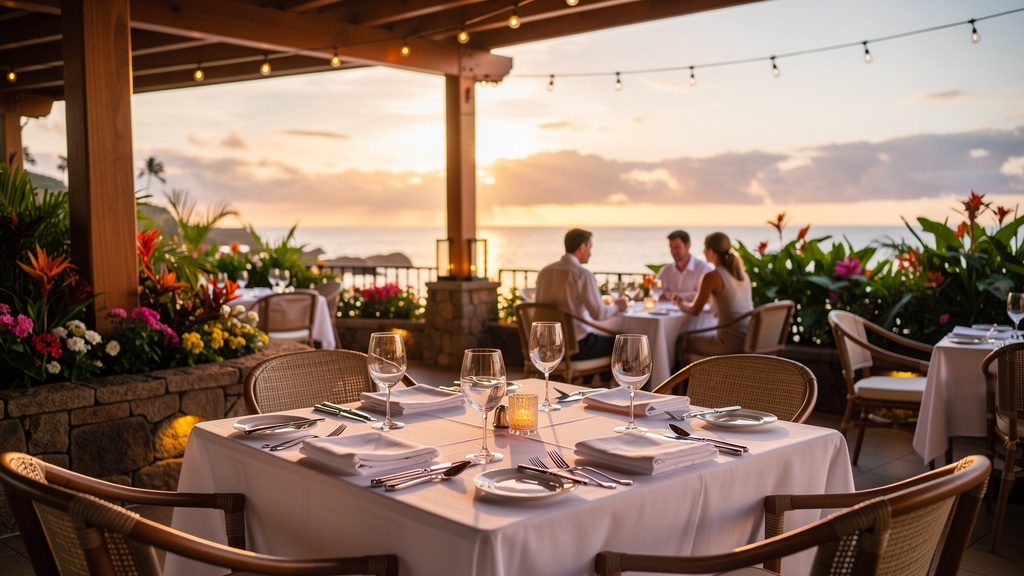
Top Fine Dining Experiences
- Alan Wong's, Honolulu — Hawaii Regional Cuisine pioneer
- Nobu Lanai — world-famous Japanese fusion, Four Seasons
- Mama's Fish House, Maui — most sought reservation in Hawaii
- Merriman's, Waimea Big Island — farm-to-table pioneer
- The Beach House, Kauai — oceanfront sunset dining
- Hoku's at Kahala, Oahu — contemporary Hawaiian cuisine
The Plate Lunch: Hawaii's Democratic Institution
Few culinary experiences are more distinctly Hawaiian than the plate lunch — and nothing illustrates the democratic, multicultural character of island food culture better. The plate lunch originated in the sugar cane fields, where workers from different ethnic backgrounds would share their food during lunch breaks, gradually creating a hybrid cuisine that drew elements from every community.
A classic plate lunch consists of a protein — the most popular options include teriyaki chicken, katsu chicken (breaded and fried Japanese style), Korean kalbi short ribs, BBQ beef, shoyu chicken, and mahimahi — served alongside two scoops of white rice and a scoop of macaroni salad. The macaroni salad, a ubiquitous feature of the Hawaiian plate lunch, is always mayo-based and always plain — this is not a continental pasta salad but a very specific preparation with its own rules and traditions.
The best plate lunches in Hawaii are found not at restaurants but at lunch wagons (mobile food trucks that park near beaches, construction sites, and shopping centers), at small takeout shops that may have been operating the same recipe for generations, and at the deli counters of local supermarkets. Helena's Hawaiian Food in Honolulu, operating since 1946, is perhaps the most famous plate lunch institution in the state, with James Beard Award recognition for its outstanding traditional Hawaiian cooking in a completely unpretentious setting.
Hawaii's Farmers Markets: A Celebration of Tropical Abundance
Hawaii's farmers markets offer some of the most extraordinary agricultural produce available anywhere in the world, reflecting the islands' remarkable climatic diversity and the creativity of their farmers. The combination of volcanic soil enriched by thousands of years of weathered lava, consistent rainfall on the windward coasts, and year-round growing conditions produces fruits, vegetables, and herbs of extraordinary intensity and variety.
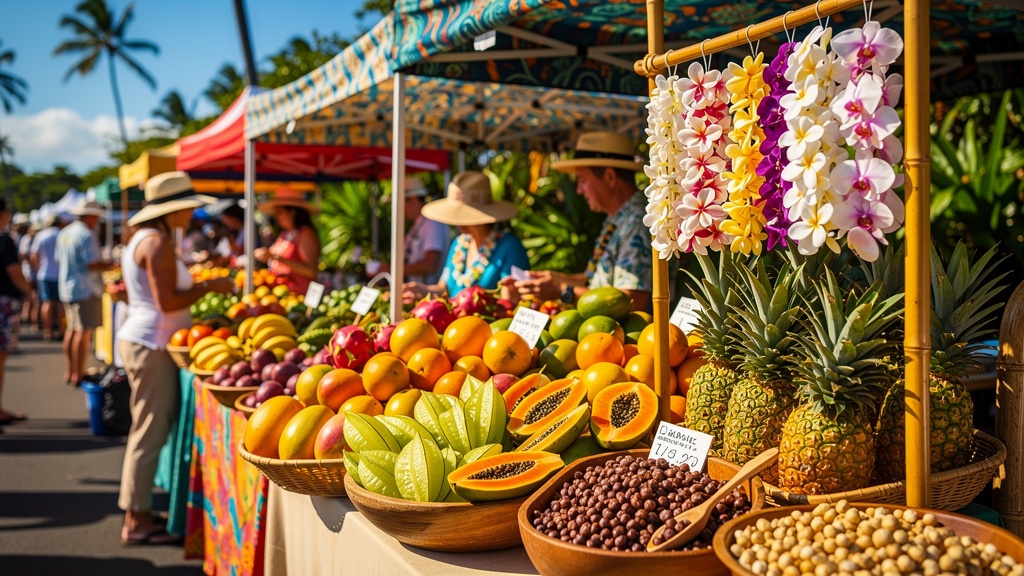
What to Look for at Farmers Markets
- Lilikoi (passion fruit) in multiple varieties
- Rambutan, longan, and lychee (summer)
- Apple bananas — smaller, sweeter than mainland bananas
- Mountain apple — crisp, rose-scented Hawaiian fruit
- Fresh macadamia nuts (roasted or raw)
- Kona coffee and local chocolate
- Handmade fresh lei and tropical flowers
- Locally made jams, sauces, and condiments
Food Trucks and Local Eats: Hawaii's Street Food Scene
Hawaii's food truck scene has blossomed over the past decade, with creative operators bringing world-class cooking to casual roadside settings across all islands. The food truck culture here is particularly strong on the Oahu North Shore, where a cluster of trucks near Haleiwa Town serves everything from garlic shrimp (a North Shore specialty since Giovanni's Shrimp Truck launched the craze in the 1990s) to fresh fish tacos, acai bowls, and creative fusion cuisine. The combination of beach atmosphere, outdoor picnic tables, and excellent food makes North Shore food trucking one of the quintessential Oahu experiences.
Garlic shrimp is one of the most beloved North Shore traditions. Giovanni's Original White Shrimp Truck, operating from the same location since 1993, serves buttery, intensely garlicky shrimp sautéed in lemon and butter, piled over two scoops of rice. The shrimp come from the nearby Kahuku shrimp farms on the island's northeastern coast, ensuring extraordinary freshness. Visitors consistently describe Giovanni's as one of the best meals they have in Hawaii — not despite its simple roadside setting but partly because of it.
No guide to Hawaiian eating would be complete without addressing shave ice, which is to ice cream what fine art is to refrigerator magnets. Good shave ice — and there is a significant difference between good and mediocre — is made with a blade that shaves actual ice into ribbons of extraordinary fineness, then drenched in house-made syrups in flavors from haupia to lilikoi to coconut. The ice is so fine that it absorbs the syrup throughout rather than having it pool at the bottom, creating a dessert of surprising textural complexity.
Kona Coffee: The Only American-Grown Commercial Coffee
Kona coffee is grown exclusively on the western slopes of Mauna Loa and Hualalai volcanoes on the Big Island, in a narrow belt of land characterized by sunny mornings, afternoon cloud cover, and rich volcanic soil — conditions that coffee plants find ideal. Kona coffee has been grown commercially since the 1800s and is now one of the most prestigious coffee appellations in the world, sold at prices that reflect both its exceptional quality and the high cost of labor on small family farms.
Real 100% Kona coffee is significantly more expensive than blends, and the label must say "100% Kona" to guarantee the origin. Kona coffee blends (which may contain as little as 10% Kona coffee) are legal but substantially less distinguished in flavor. Visiting a working Kona coffee farm — many offer tours that explain the cultivation, harvesting, and processing of the beans — provides fascinating insight into the extraordinary labor involved in producing high-quality coffee and the agricultural diversity of the Big Island.
Hawaii's Other Agricultural Treasures
Coffee is not the only agricultural gem produced in Hawaii. The islands are also home to significant cacao cultivation — particularly on the Big Island and Oahu's North Shore — that produces single-origin chocolate of exceptional quality. MADRE Chocolate, Mauna Kea Cacao, and Original Hawaiian Chocolate Factory are among the producers worth visiting for tours and tastings that reveal the full story from cacao pod to finished chocolate bar.
Macadamia nuts have been associated with Hawaii for over a century and remain one of the state's most important agricultural exports. The rich, buttery flavor of fresh Hawaiian macadamia nuts — particularly when lightly roasted and salted with local sea salt — is dramatically superior to the processed versions sold on the mainland. Farms across the Big Island and Maui offer tours, and bulk raw macadamia nuts purchased directly from farms or at farmers markets are both less expensive and fresher than packaged alternatives.
Hawaiian sea salt, hand-harvested from traditional salt pans on the islands of Molokai and Kauai, is a product of remarkable culinary distinction. Red alae salt, colored by volcanic red clay, has a mineral complexity that enhances meat and fish preparations; black lava salt is finished with activated charcoal and provides dramatic visual contrast on dishes. Both types are available at markets and specialty shops across the islands and make exceptional culinary souvenirs.
Drinking in Hawaii: Cocktails, Craft Beer, and Local Spirits
Hawaii's drinks culture has evolved considerably beyond the generic blue cocktails served in souvenir glasses at resort bars. The state now supports a thriving craft brewing scene, with dozens of breweries producing IPAs, stouts, and lagers that incorporate local ingredients including Kona coffee, tropical fruits, guava, and even poi. Maui Brewing Company, Kona Brewing Company, and Honolulu Beerworks are among the best-known producers, with taprooms that offer tasting flights in settings where the quality of the beer matches the quality of the surroundings.
The mai tai, which was invented in Oakland, California in 1944 by Trader Vic Bergeron, has been adopted so thoroughly by Hawaii that most visitors believe it is native. A well-made mai tai — built from aged rum, fresh lime juice, orgeat (almond syrup), and orange curaçao — is one of the finest cocktails in the world, and Hawaii's bartenders bring particular skill to its preparation. The classic version served at the Royal Hawaiian Hotel's Mailani Terrace on Waikiki, made with premium rum and fresh-squeezed lime, is justifiably celebrated.